


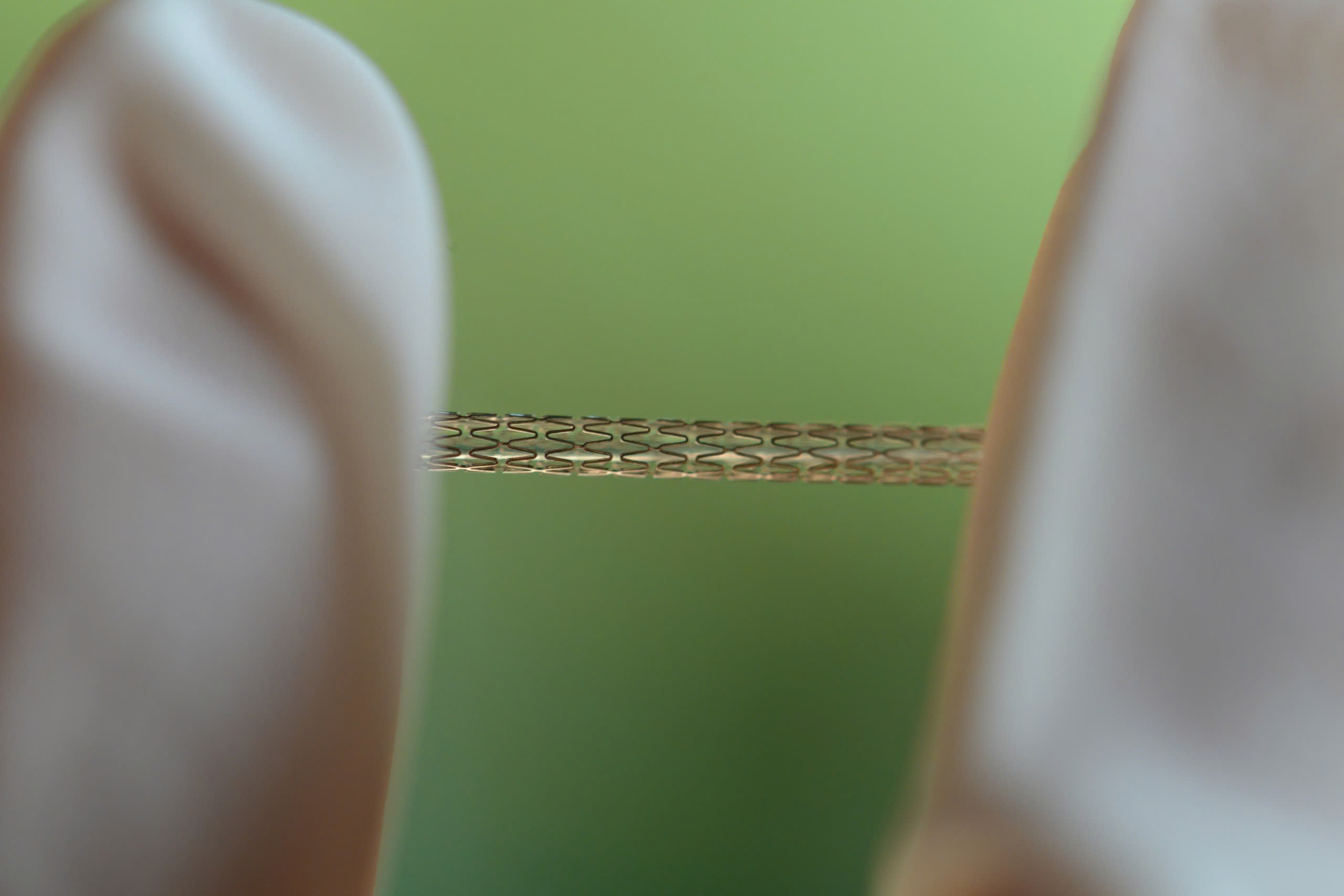
[Series: USM Product Insights] EPISODE 1: WHAT IS A SIROLIMUS-ELUTING STENT? UNDERSTANDING THE TECHNOLOGY BEHIND DRUG-ELUTING CORONARY STENTS
Coronary stents have become an important technology in the treatment of coronary artery disease by helping restore and maintain blood flow through narrowed arteries.
Over the years, stent technology has continued to evolve — from bare-metal stents to drug-eluting stents (DES), which combine mechanical support with localized drug delivery.
Among these advancements, Sirolimus-eluting stents represent one of the most widely adopted drug-eluting stent technologies, integrating stent design, coating technology, and pharmacological function into a single medical device system.
But how does a Sirolimus-eluting stent work, and what makes this technology different?
1. What Is a Sirolimus-Eluting Stent?
A Sirolimus-eluting stent (SES) is a type of drug-eluting coronary stent designed to provide mechanical support inside a coronary artery while delivering a therapeutic drug locally to the vessel wall. Unlike a bare-metal stent, which only provides structural support, a drug-eluting stent incorporates a drug-containing coating layer that enables controlled drug release after implantation.
A Sirolimus-eluting stent typically consists of three main components:
1.1 Stent Platform
The metallic framework provides radial support to help maintain vessel opening after implantation.
1.2 Drug Coating Layer
A specialized coating system carries and controls the release of Sirolimus at the target location.
1.3 Sirolimus Drug
Sirolimus is an antiproliferative agent used in drug-eluting stents to regulate cellular responses following stent implantation.
Together, these components allow the stent to function not only as a mechanical structure but also as a localized drug delivery system.
 2. Why Is Sirolimus Used in Drug-Eluting Stents?
Following stent implantation, the vessel undergoes a natural healing response. While healing is necessary, excessive proliferation of vascular smooth muscle cells may contribute to tissue growth inside the stented area, which can affect long-term vessel patency.
Sirolimus is used in drug-eluting stents because of its ability to influence cellular proliferation pathways.
Through controlled local release, the drug is delivered directly to the treatment area, allowing the device to combine:
- Mechanical vessel support
- Localized drug delivery
- Controlled biological response
This integration represents the key difference between drug-eluting stents and traditional bare-metal stents.
 3. How Does a Sirolimus-Eluting Stent Work?
The function of a Sirolimus-eluting stent can be understood through three key stages:
Step 1: Mechanical Support
During implantation, the stent expands to restore the vessel diameter and provides structural support to maintain vessel opening.
The stent framework is designed to achieve appropriate radial strength while maintaining flexibility and deliverability.
Step 2: Local Drug Release
After implantation, the coating layer releases Sirolimus directly at the target site.
The drug delivery system is designed to provide controlled release characteristics, allowing the therapeutic agent to interact with the surrounding vessel tissue.
Step 3: Integration Between Device Design and Biological Response
The performance of a drug-eluting stent depends on the interaction between multiple elements:
- Stent geometry
- Strut dimensions
- Material properties
- Coating technology
- Drug characteristics
Each factor contributes to the overall performance of the device system.
 4. The Engineering Behind Drug-Eluting Stent Performance
Although the drug is an important component, the performance of a Sirolimus-eluting stent does not rely on the drug alone.
Medical device engineering plays a critical role in achieving the intended function.
Key considerations include:
Stent Design
The geometry of the stent structure influences:
- Flexibility
- Radial strength
- Vessel interaction
- Deliverability
Strut Dimensions
The dimensions of each stent strut are carefully considered because they affect:
- Mechanical performance
- Device profile
- Interaction with vessel tissue
Small dimensional differences can influence the overall behavior of the stent system.
Coating Technology
The coating system must balance several requirements:
- Drug loading capability
- Controlled release performance
- Coating integrity
- Compatibility with the stent platform
Manufacturing Precision
Producing a drug-eluting stent requires precise control throughout the manufacturing process.
Critical factors include:
- Material processing
- Laser cutting accuracy
- Surface finishing
- Coating consistency
- Dimensional control
The interaction between these manufacturing factors determines whether the final device performs according to its intended design.
This principle applies across modern medical device development — where precision is not only about producing individual parts accurately, but also ensuring that every component functions together as an integrated system. Sirolimus-eluting stents represent the combination of mechanical engineering, drug delivery technology, and precision manufacturing.
By integrating structural support with localized drug delivery, this technology demonstrates how modern medical devices continue to evolve through multidisciplinary innovation.
At USM Healthcare, we believe that reliable medical device performance begins with a strong foundation of engineering precision, manufacturing control, and quality-driven processes — enabling every component to work together as an intended system.
